







OFFICIAL PRESS RELEASE
Collaborating for resilience: High-Level talks to scale up Disaster Risk Financing in Africa
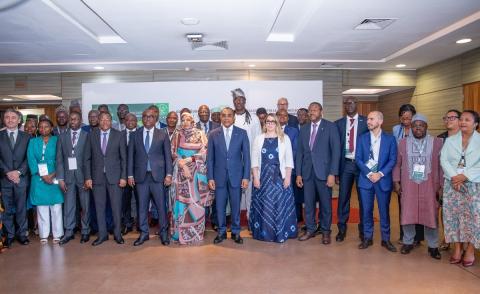
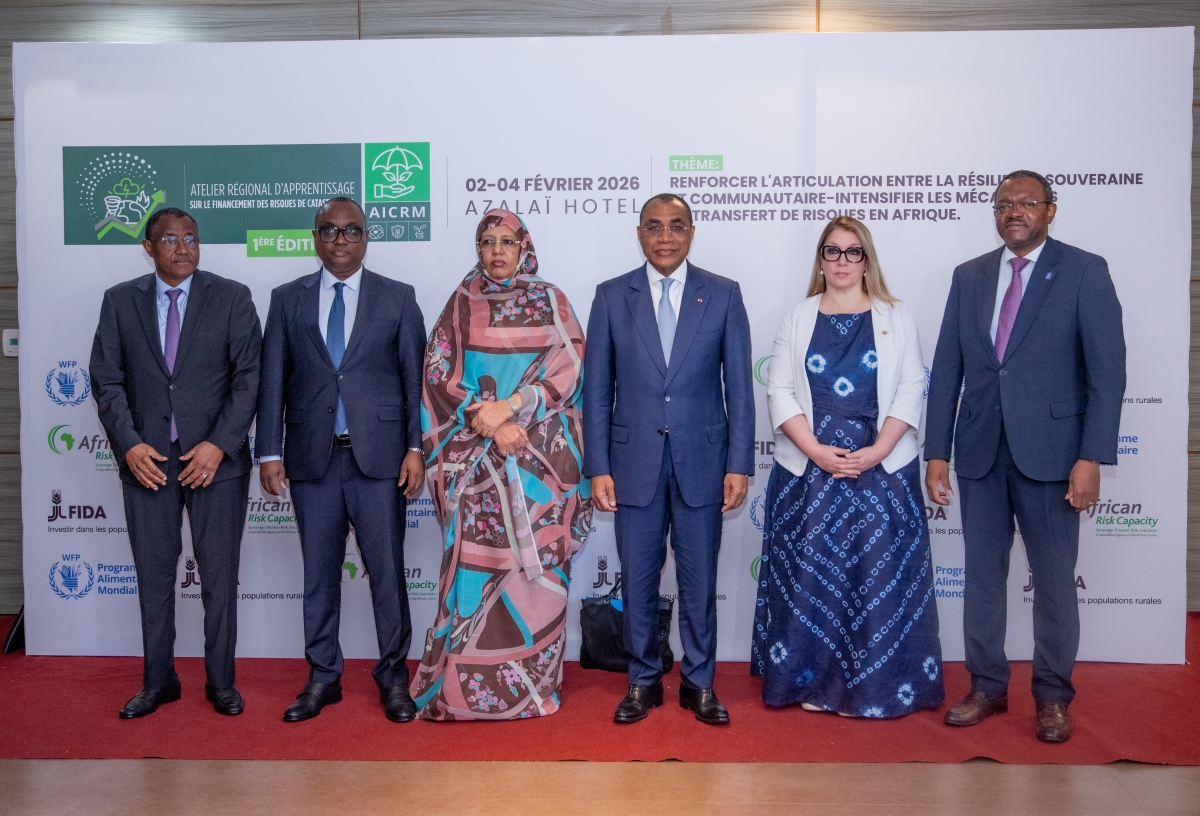
Abidjan, 2-4 February, 2026 – This week, the African Risk Capacity (ARC), in partnership with the International Fund for Agricultural Development (IFAD) and the World Food Programme (WFP), under the African Integrated Climate Risk Management (AICRM) programme, convened a High-Level Consultation on Disaster Risk Financing (DRF) in Africa. This regional initiative, launched in 2024, aims to enhance the resilience of smallholder farmers across seven Sahelian countries. The event sought to find ways to strengthen and scale DRF as a mechanism for resilience building, promoting collaboration between African governments and key stakeholders to advance collaborative strategies for expanding financial protection and coverage across the continent.
The high-level discussions featured five panel discussions, beginning with an in-depth analysis of the current state of pre-arranged disaster finance across Africa. Subsequent sessions focused on strategies to bridge existing protection gaps, develop inclusive systems, and draw lessons from past initiatives in financial protection for governments. The final panel explored the integration of macro-level insurance, anticipatory action, social protection, and microinsurance, concluding with a summary of key insights and an agreement on actionable next steps.
The high-level dialogue featured five expert panels designed to find a clear path forward. The discussions began with a thorough analysis of the current state of pre-arranged disaster risk finance in Africa. Subsequent sessions focused on actionable strategies to bridge existing protection gaps, develop inclusive financial systems, and apply lessons learned from past initiatives. The final panel explored the integration of macro-level insurance, anticipatory action, social protection, and microinsurance, concluding with a summary of key insights and a consensus on actionable next steps.
Amid a worsening climate crisis, the High-Level Consultation provided a critical platform to strengthen Africa’s capacity to protect lives and livelihoods through improved preparedness, complementing other in-country social protection systems. Discussions focused on linking sovereign risk transfer mechanisms with national delivery systems such as anticipatory action, shock-responsive social protection, and microinsurance, with the goal to enhance resilience across the continent.
“With the AICRM Programme, we are implementing an integrated approach to strengthen the resilience of smallholder farmers. Together, we can reduce the protection gap and provide rural communities with the essential tools to secure their livelihoods, while removing financial barriers and strengthening the enabling frameworks for these mechanisms,” said Bernard Hien, IFAD Regional Director for West and Central Africa.
“Avec le Programme AICRM, nous mettons en place une approche intégrée pour renforcer la résilience des petits exploitants. Ensemble, nous pouvons réduire le déficit de protection et fournir aux communautés rurales les outils essentiels pour sécuriser leurs moyens de subsistance, tout en levant les obstacles financiers et en renforçant les cadres favorables à ces mécanismes,” Bernard Hien, Directeur Regional FIDA Afrique de l’Ouest et du Centre.
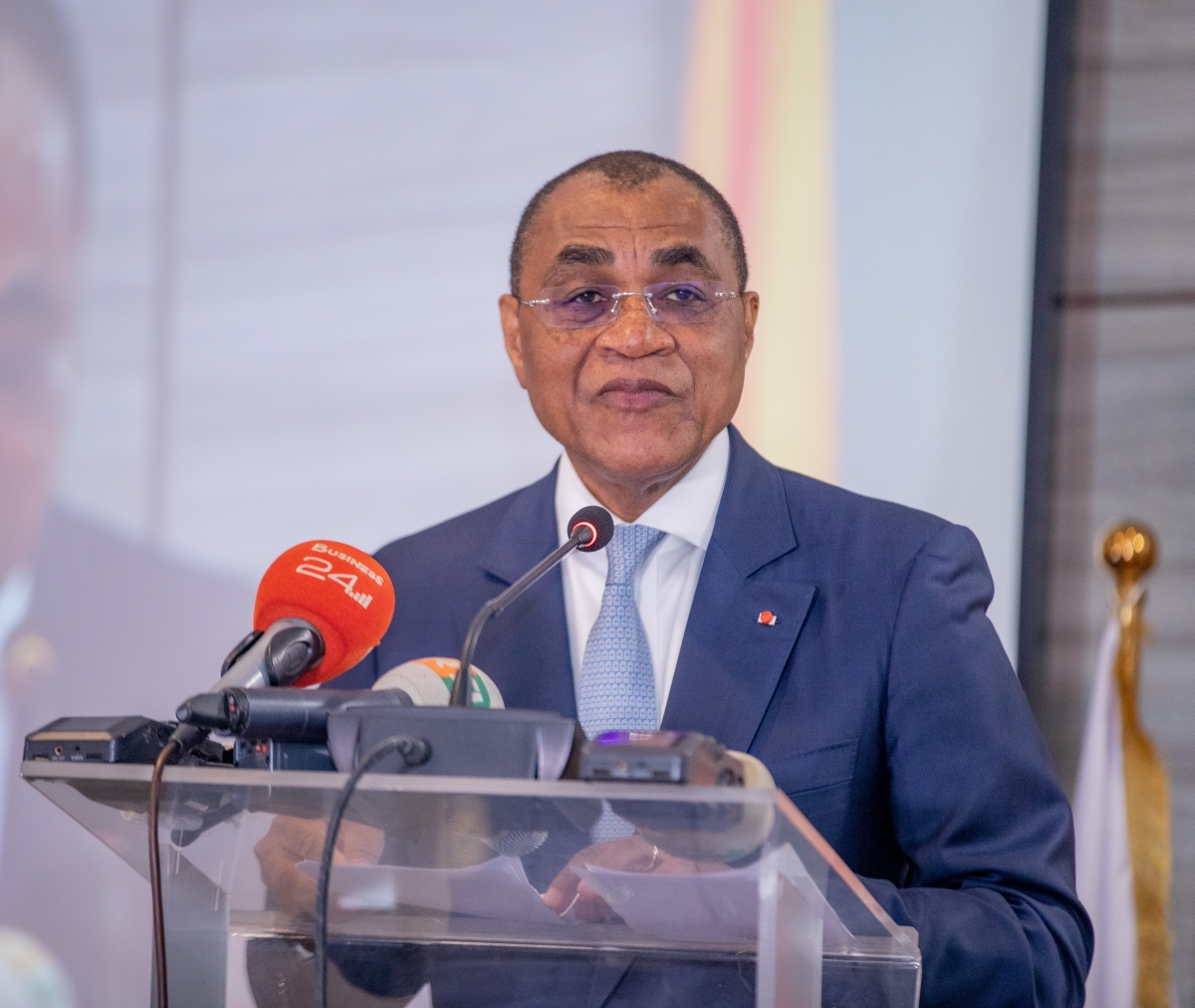
Dr. Jean Chrysostome NgabItsinze, ARC’s Group Director General, remarked, "Risk financing is a critical component of building resilience. It provides an essential layer of protection against the multitude of threats facing our continent. The proof is in our results: since 2012, ARC has delivered over $350 million in insurance claims to nations following major weather-induced disasters. This is more than just insurance; it's a proven mechanism for advancing climate action and strengthening national strategies."
The dialogue centred on concrete strategies to protect lives and livelihoods, combat food insecurity, and promote a layered approach to risk management—all critical to maximising Africa’s adaptive capabilities. Participants also examined how pre-arranged financing can transform emergency response, considering the operational perspectives and constraints of governments, donors, and other development partners.
“In the current context of uncertainty, it is imperative to consolidate disaster risk financing in order to ensure targeted, effective, and efficient assistance where it is most needed, while optimising the impact of each resource invested,” said Olivia Hantz, WFP Representative and Country Director in Côte d'Ivoire.
By fostering greater alignment among these key actors, the consultation identified practical ways to build a more coordinated, effective, and resilient disaster risk financing ecosystem across the continent.
This event underscored the vital role of collaboration in advancing Africa’s resilience, emphasising the need for coordinated country-level strategies that leverage the strengths of all stakeholders. It also reinforced the urgency of scaling up climate response efforts across all areas to protect the lives and livelihoods of the most vulnerable.
Partners committed to promoting more similar integrated engagements to stay aligned and strengthen Africa’s resilience building journey.
The consultations concluded with a unanimous and overwhelming consensus on the value of disaster risk financing as a pillar for building Africa’s resilience. This event underscored that collaboration is not just beneficial but essential, emphasising the urgent need for coordinated, country-level strategies that leverage the unique strengths of governments, development partners, and technical partners. There was strong agreement on the critical need to scale these efforts to protect the lives and livelihoods of the most vulnerable from escalating climate risks.
Ultimately, strengthening DRF in Africa will contribute to achieving key continental priorities, including the Sustainable Development Goals (SDGs) and the aspirations of Africa's Agenda 2063.